Why Becoming a Mom Can Trigger Childhood Trauma (And Why You're Not Crazy for Feeling It)
I honestly think motherhood has become harder in ways people don’t fully talk about yet.
Not because moms today care less.
Not because they’re weaker.
Not because they’re doing anything wrong.
But because mothers are now trying to raise children while constantly consuming content about how they should be raising children. And I think it’s exhausting us. There’s almost no escape from it anymore.
You open your phone for five minutes while sitting on the couch overstimulated and touched out, and suddenly you’re watching someone:
calmly narrate a tantrum at 2am
make aesthetically perfect lunches
explain the “right” way to respond to every emotion
softly whisper-parent while their house somehow looks spotless
And after enough scrolling, it starts to get into your nervous system. You begin questioning things you normally wouldn’t.
Did I say that wrong?
Should I have responded differently?
Am I messing my child up?
Why does everyone else seem calmer than me?
I think a lot of mothers are quietly carrying this pressure to become perfectly emotionally regulated human beings overnight. And that is not realistic.
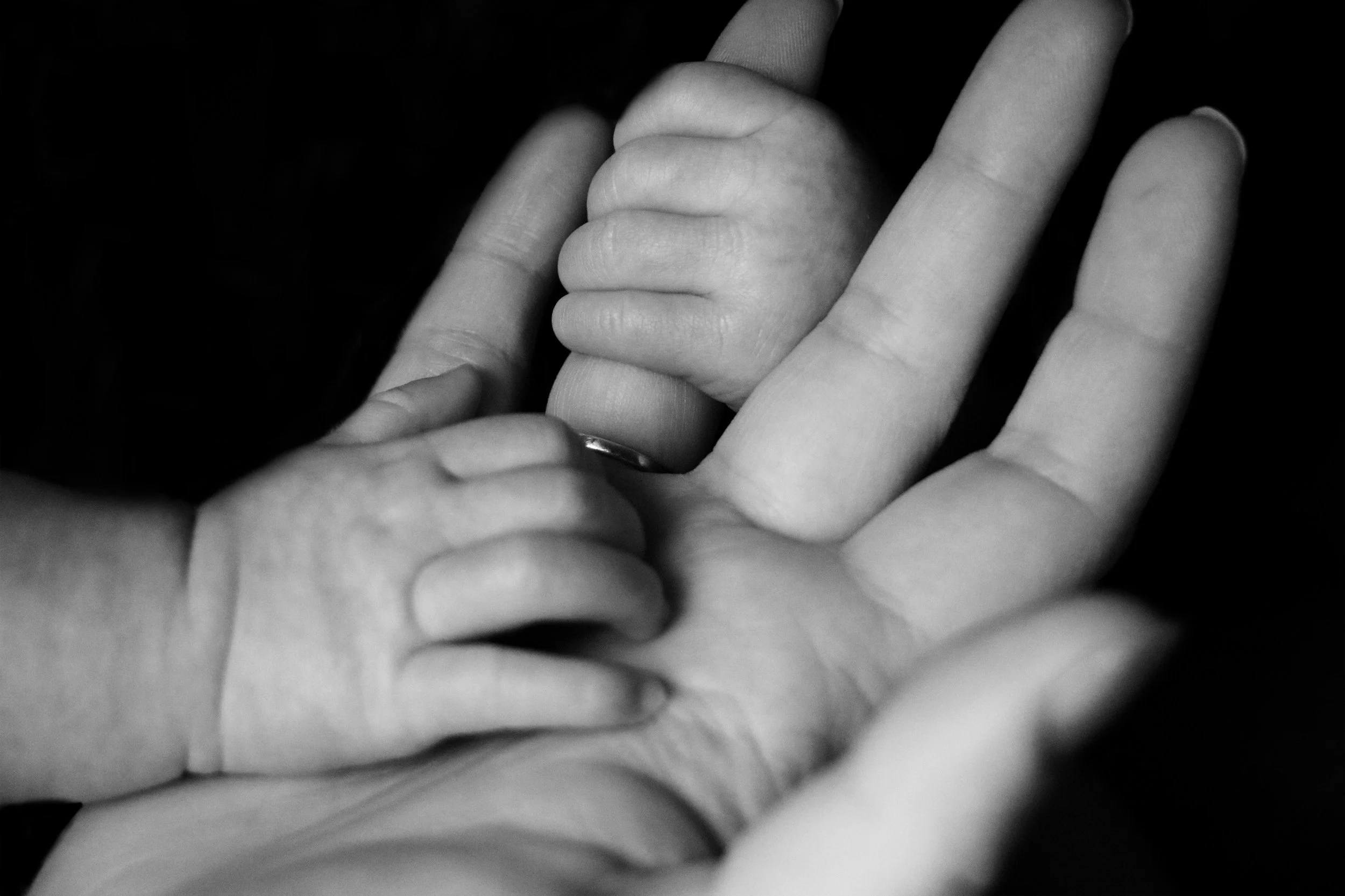
A close-up black-and-white photograph of a baby grasping a parent's hand. The image represents the powerful bond between parent and child and reflects how motherhood can bring awareness to childhood experiences, attachment wounds, and opportunities for healing.
Why Motherhood Can Bring Old Wounds to the Surface
Motherhood has a unique way of activating our memories, emotions, and nervous systems because we're suddenly faced with experiences that remind us, sometimes consciously, sometimes unconsciously of what we received, or didn't receive, as children.
For some moms, that looks like:
Feeling unexpectedly emotional when comforting their child
Becoming overwhelmed by their child's big feelings
Struggling with guilt, perfectionism, or anxiety
Feeling intense pressure to "get parenting right"
Worrying constantly about repeating family patterns
Feeling triggered by situations that seem small on the surface
Sometimes a toddler's meltdown isn't just a toddler's meltdown.
Sometimes it touches something deeper.
A memory.A feeling.An unmet need.
And your nervous system responds before your logical brain has a chance to catch up.
According to the Centers for Disease Control and Prevention's research on Adverse Childhood Experiences (ACEs), childhood adversity can have long-term impacts on emotional regulation, relationships, stress responses, and mental health throughout adulthood.
The Fear of Repeating the Past
One of the biggest fears I hear from mothers is:
"What if I become my parent?"
Especially for women who grew up around:
Addiction
Emotional neglect
Chronic criticism
Unpredictability
Conflict
Mental illness
Parentification
As someone who grew up with a father who struggled with addiction, I understand this fear personally. Many of us become parents carrying a quiet promise: “I'll do things differently." And while that intention is incredibly powerful, it can also create enormous pressure. Because suddenly every parenting decision feels like a test. Every hard day feels like evidence that you're failing. Every moment of frustration feels loaded with meaning.
The truth is that breaking cycles doesn't require perfection. It requires awareness.
And the fact that you're asking these questions at all often tells me you're already doing more differently than you realize.
Why Trauma Often Shows Up as Anxiety in Motherhood
Sometimes trauma doesn't show up as memories.
Sometimes it shows up as anxiety.
You might notice:
Constant worry about your children
Difficulty relaxing
Feeling responsible for everyone's emotions
Trouble trusting others
Needing everything under control
Feeling guilty when you take time for yourself
Many women don't initially connect these struggles to their childhood experiences.
Instead they assume:
"I'm just anxious."
"I'm just overwhelmed."
"I'm just not handling motherhood well."
But often there's a deeper story underneath.
Research from the National Child Traumatic Stress Network highlights how early childhood experiences can continue influencing emotional responses and stress regulation throughout adulthood

A mother and young child walk side-by-side along a peaceful beach surrounded by nature. The image reflects the journey of healing from childhood trauma, building healthier relationships, and creating a different path for the next generation through conscious parenting and emotional growth.
Motherhood Can Also Bring Up Grief
Not just grief for what happened. But grief for what didn't happen. The comfort you didn't receive.The safety you needed.The support you deserved. The childhood experiences you wish had been different. Many women find themselves grieving for their younger selves after becoming mothers. Because watching your own child grow can make you realize just how much you were carrying at that age.
That realization can be heartbreaking. But it can also be incredibly healing.
Healing Doesn't Mean Becoming a Perfect Parent
I think social media has made this part harder. There is so much pressure to say the perfect thing. Respond the perfect way. Never lose your patience. Always stay regulated.
But healing isn't about becoming a perfect parent. It's about becoming a more connected one. Children don't need perfection. They need repair. They need safety. They need parents who are willing to learn and grow. In fact, research from the Harvard Center on the Developing Child highlights how responsive relationships, not perfection, are what help children thrive. That matters because so many mothers are carrying unrealistic expectations that leave them feeling exhausted and defeated.
When Therapy Can Help
If becoming a mother has brought up anxiety, overwhelm, emotional triggers, relationship challenges, or old wounds you weren't expecting, therapy can help.
As a therapist, I work with women who are navigating:
Childhood trauma
Anxiety
Motherhood overwhelm
Relationship stress
Identity shifts
Perfectionism
Nervous system dysregulation
Together we work toward understanding the patterns that were shaped by your past while building tools that support the life you want now.
You can also read:
You Don't Have to Carry It Alone
If motherhood is bringing up things you didn't expect, please know that doesn't mean you're doing it wrong. Sometimes becoming a mother doesn't just introduce us to our children. It introduces us to parts of ourselves that have been waiting to heal. And that's not something to be ashamed of.
It's often where healing begins.
If you're located in Virginia, Rhode Island, Florida, South Carolina, or North Carolina and are looking for modern, trauma-informed therapy, I'd be honored to support you.
You can learn more or schedule a consultation here.
And if you'd like more honest conversations about motherhood, mental health, and healing, sign up for my bi-wekly newsletter.